
Yükleniyor...

Foreign Trade Program

Yapılış Tarihi | 18 November 2024, Monday

Teknofest
You are in the right place to become the hero of a success story that extends from local to global...
1 -
About the Programme

The Foreign Trade Program is conducted within the Burdur Mehmet Akif Ersoy University Bucak Hikmet Tolunay Vocational School of Transportation and Logistics. The school was established in 1995 under the name Bucak Hikmet Tolunay Vocational School, was affiliated with Burdur Mehmet Akif Ersoy University in 2006, and adopted its current name in 2026. The Foreign Trade Program has been continuing its educational activities since 2005.

The Foreign Trade Associate Degree Program trains professionals who can perform operational tasks in the fields of import and export transactions, customs legislation, international payment methods, banking-exchange transactions, and foreign trade logistics. The program utilizes the strong export potential of the region, especially marble and natural stone exporters in Bucak and its surroundings, and the access advantages to the ports of Antalya, Izmir, and Mersin as its application area.

2 -
Programme Mission

To train professionals who are proficient in foreign trade and customs legislation, accurately prepare international documents, effectively use digital trade tools, adhere to ethical values, and adopt lifelong learning; to contribute to the development of exports in cooperation with regional businesses.

3 -
Programme Vision

To be a foreign trade program that combines regional export potential with digital trade and logistics competencies, whose graduates are preferred in national and international trade networks, and is application-oriented.

4 -
Programme Educational Objectives

PEA1: Graduates will carry out foreign trade operations in businesses engaged in import and export, customs consultancies, and logistics firms in accordance with the applicable legislation.

PEA2: Graduates will manage international payment methods, exchange and banking transactions, and foreign trade documents accurately and completely.

PEA3: Graduates will use e-commerce platforms, professional software, and artificial intelligence-supported tools in foreign trade processes.

PEA4: Graduates will work within a team with awareness of ethical and legal responsibilities, and develop their careers through professional foreign language and lifelong learning.

*PEA: Program Educational Objectives

5 -
Programme Outcomes

Students who successfully complete the programme achieve the following programme outcomes (PO):

  1. Applies foreign trade and customs legislation to operational processes within the framework of national and international regulations.
  2. Prepares international documents used in foreign trade transactions in accordance with current legislation and payment methods.
  3. Manages foreign trade operations in integration with logistics, supply chain, and warehouse management processes.
  4. Uses electronic commerce platforms and professional software effectively in foreign trade operations.
  5. Analyzes the effects of changes in global markets on foreign trade processes by interpreting micro and macroeconomic data.
  6. Conducts basic oral and written communication in a foreign language using basic professional terminology in the field of foreign trade.
  7. Analyzes the regional economic structure, sectoral focuses, and local production potential in light of foreign trade data.
  8. Produces operational solutions by utilizing office programs, information technologies, and AI-powered digital tools in foreign trade and logistics processes.
  9. Exhibits a professional attitude in accordance with professional ethical principles, legal responsibilities, and independent working discipline.
  10. Uses the native language effectively in oral and written communication processes, possessing an awareness of the historical development process and social values.
  11. Conducts projects by taking responsibility in individual or team work related to foreign trade processes.
  12. Follows the incentive, grant, and aid mechanisms in foreign trade procedures and adapts them to operational processes.
  13. Execute s trade price transfers subject to foreign exchange legislation, payment methods, and international banking transactions completely.
  14. Follows current EU and global trade regulations, and aligns operations with international standards.
  15. Continuously updates professional competencies in line with lifelong learning principles and quality management processes.

For the contribution of courses to programme outcomes and their relation to the Turkish Qualifications Framework, see the "Course and Programme Outcomes Relation" section of the ECTS Information Package.

6 -
Academic Staff

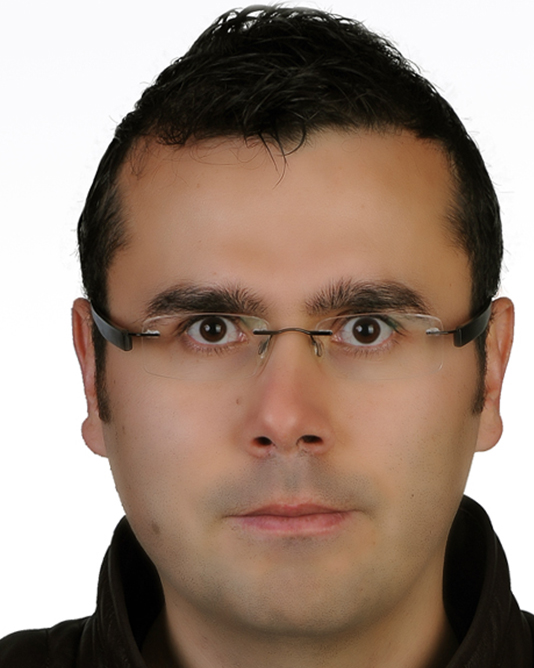
Asst. Prof. Dr. Durmuş ÇALIŞKAN
Department Head
mail
dcaliskan@mehmetakif.edu.tr
phone
+90 248 213 81 47
abs
ABS Profili
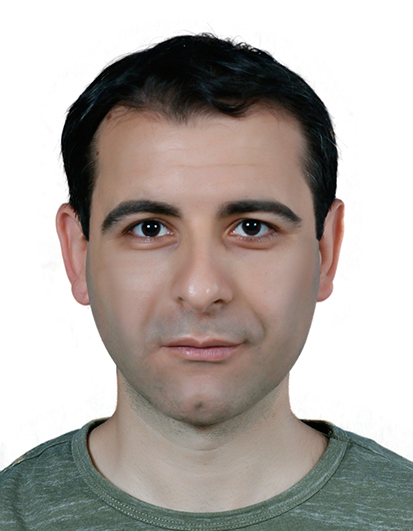
Lecturer Dr. Ali ELİBOL
mail
aelibol@mehmetakif.edu.tr
phone
+90 248 213 81 07
abs
ABS Profili
Asst. Prof. Dr. Turgay CEYHAN
mail
tceyhan@mehmetakif.edu.tr
phone
+90 248 213 81 00
abs
ABS Profili
7 -
ECTS Information Package

The program's ECTS/Bologna information package is published on our university's Student Information System (SIS). You can open the information package with the button below and navigate to the desired title from the left menu.

Open ECTS Information Package ↗

Headings included in the information package:

  • Introduction
  • Objectives and Goals
  • About the Program
  • Program Profile
  • Program Authorities
  • Degree Awarded
  • Admission Requirements
  • Transition to Higher Level
  • Graduation Requirements
  • Recognition of Prior Learning
  • Conditions and Rules of Competence
  • Employment Opportunities
  • Courses
  • Program Qualifications
  • Relationship of Courses and Program Qualifications
  • TYÇ and Program Qualifications Relationship
8 -
Internship

In the Foreign Trade Program, students must complete a 20 working days mandatory internship as a graduation requirement. The internship is carried out in public or private sector organizations suitable for the program's professional field, in accordance with the Internship Directive of Burdur Mehmet Akif Ersoy University Vocational Schools and the internship calendar determined by the School Board.

9 -
Employment Opportunities for Graduates

Graduates who successfully complete the program can work in the following areas:

  • Foreign trade units of industrial and commercial enterprises engaged in import and export
  • Customs consultancies and customs clearance firms
  • International transportation, logistics, and forwarding firms
  • Foreign trade and exchange units of banks
  • Free zones, exporter unions, and chambers of commerce
10 -
Vertical Transfer Options

Graduates of the Foreign Trade Program can transition to relevant undergraduate programs announced in the DGS guide each year, provided they pass the Vertical Transfer Exam (DGS) conducted by ÖSYM. Major programs include:

  • International Trade
  • International Trade and Logistics
  • International Trade and Finance
  • Logistics Management
  • Business Administration
  • International Business Management
11 -
Accreditation

The Foreign Trade Program of Bucak Hikmet Tolunay Vocational School of Transportation and Logistics is conducting self-assessment and accreditation preparation studies in accordance with the criteria of the Association of Vocational Schools Accreditation (MEDEK).

The educational activities of the program are regularly reviewed with a continuous improvement approach based on the opinions of students, graduates, and employers, as well as the recommendations of the program advisory board.

12 -
Reports and Indicators

Activity reports related to the program, unit self-assessment reports, student and stakeholder survey results, and performance indicators are published on the quality pages of our Vocational School.

13 -
Continuous Improvement

Within the program, student satisfaction surveys, advisory meetings, internal and external stakeholder opinions, and graduate feedback are regularly evaluated. Improvement activities are planned, implemented, and necessary updates are made based on the obtained data.

Quality evidence: